Last updated 2026
One of the most common questions drivers search for in 2026 is: Does my car insurance cover rental cars? In many cases, your personal auto insurance policy extends to rental vehicles. Still, the exact coverage depends on your policy type, coverage limits, and how the rental car is being used.
Understanding whether your liability, collision, and comprehensive coverage apply to a rental car can help you avoid unexpected costs. It also allows you to decide whether purchasing additional rental car insurance is truly necessary. Reviewing your policy or consulting your insurance provider before renting ensures you have the proper protection and peace of mind.
I will guide you step by step so that you can clearly understand the process and grow your business successfully. You can confidently rely on my suggestions, as everything will be explained clearly and professionally.
Table of Contents
ToggleHow Does My Car Insurance Cover Rental Cars?
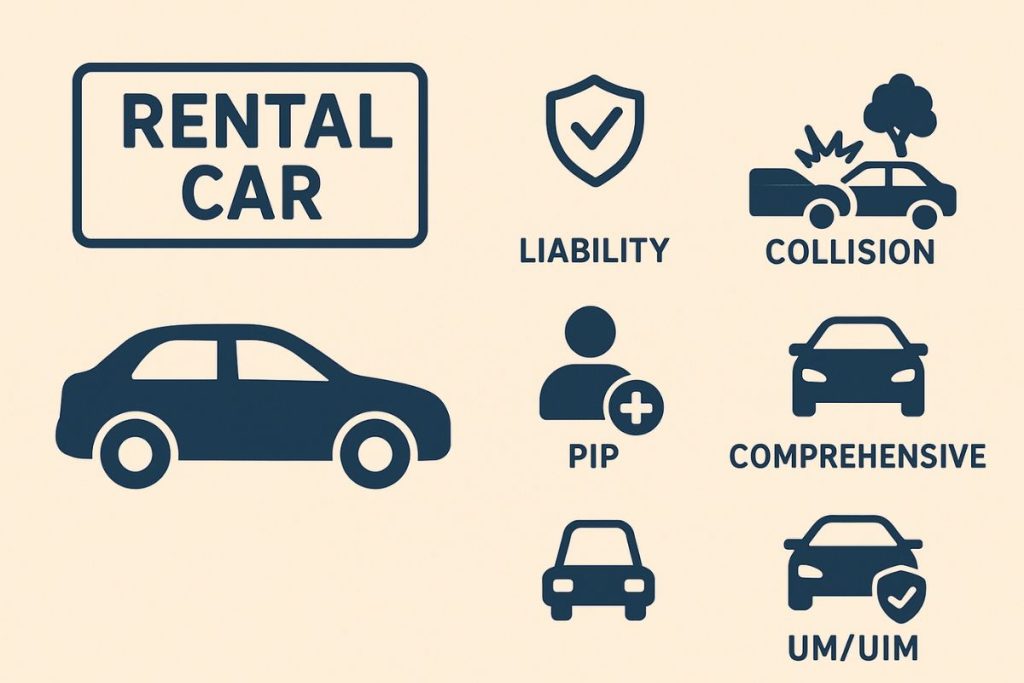
I will show you step by step how my car insurance provides coverage. You will be able to easily see and understand it, and form your own opinion on which options are best and which may not be ideal. Everything will be explained professionally so that you can make informed decisions.
-
Liability Coverage: This pays for others’ injuries or property damage if you’re at fault. Your personal policy liability limits apply to the rental. In other words, you won’t lose your liability protection just by driving a rented car.
-
Collision Coverage: If your policy includes collision insurance, it typically covers damage to a rental car resulting from an accident. As Auto-Owners explains, “if you have collision coverage on any vehicle, then collision coverage will extend to your rented vehicle. If you don’t have collision coverage, then collision coverage will not extend.”
-
Comprehensive Coverage: Similarly, comprehensive insurance (for theft, vandalism, weather damage, etc.) on your personal car usually extends to the rental. So theft or damage from a non-crash event is covered if you have this coverage. Does my car insurance cover rental cars?
-
Personal Injury Protection/Medical Payments: Medical payments (PIP) on your policy often cover you and passengers in a rental-car accident (subject to your limits). Some rentals also offer “personal accident insurance,” but if you carry PIP/MedPay, it generally applies.
-
Uninsured/Underinsured Motorist (UM/UIM): If your policy includes UM/UIM coverage, it usually extends to a rental car as well.
Country Financial summarises that “most personal car insurance policies include coverage types that can extend to rental cars, including liability, collision coverage, and comprehensive coverage. In practice, if you have full coverage on your vehicle, meaning collision, comprehensive, and liability, a rental car will be covered up to those policy limits. NerdWallet similarly advises that, as long as your policy includes comprehensive and collision coverage, you can typically decline the rental counter insurance and still drive safely. In short, full-coverage policies cover rentals just as they do your own vehicle.
Rental car fleets often resemble dealership lots, with vehicles similar in value to your own. The value of the rental matters: most insurers limit coverage to vehicles “of similar value” to those on your policy. For example, Grange Insurance notes that if your policy covers “vehicles of similar value,” then the rental will be covered up to your standard policy limits.
Your own policy’s deductible also carries over; if you file a claim on a rental, you’ll still pay the same deductible you usually do. Always confirm the exact dollar limits and deductibles with your insurer before you go. Does my car insurance cover a rental car? Does my car insurance cover a rental car?s
I have provided a table to help you understand things more easily. It clearly shows which options are best and which may not be ideal. I have simplified everything so you can see the quality of my work and the advantages clearly. Does my car insurance cover rental cars?
| Coverage Type: Transfers | s to Rental? | Deductible Applies? | Notes / Limitations |
|---|---|---|---|
| Liability | Yes | Yes | Covers others’ injuries/property damage |
| Collision | Yes (if on your policy) | Yes | Only applies if you have collision coverage |
| Comprehensive | Yes (if on your policy) | Yes | Covers theft, vandalism, and weather damage |
| PIP / MedPay | Yes | No | Covers medical expenses for you/passengers |
| UM/UIM | Yes | No | Covers accident with uninsured/underinsured driver |
| Business Use | Usually not | – | Requires separate commercial coverage |
| Exotic/Luxury Cars | Sometimes | – | Check policy limits and exclusions. |
| Loss-of-Use Fees | No | – | The rental company may charge extra. |
Coverage Gaps and Limitations?
Even though most policies extend coverage, there are significant gaps renters should watch for: Does my car insurance cover rental cars?
-
Business Use Exclusion: Personal auto policies often exclude business use. If you rent a car for work or receive compensation while using it, your regular policy may not cover that rental. Many insurers explicitly state that if the rental is for business purposes or is considered a commercial vehicle, you’ll need separate commercial coverage. Does my car insurance cover a rental car?s
-
Loss of Use and Fees: Many rental companies charge a “loss of use” fee while a damaged car is being repaired. Typically, your personal insurance does not cover this fee. For example, Grange warns that “rental car companies charge a ‘loss of use’ fee … personal insurance policies often do not cover this fee. Likewise, your policy won’t pay administrative fees, towing charges, or car rental taxes. Insurance.com specifically notes that your auto policy might not cover rental agency fees, loss-of-use charges, or other administrative costs. Does my car insurance cover a rental car?s
-
Coverage Territory: Standard U.S. policies generally cover rentals in the U.S. and Canada. Outside North America, coverage often ends. Auto-Owners explains that many U.S. insurers won’t cover rentals in Europe or Mexico: if you rent in Mexico, your U.S. policy may not satisfy Mexican law. Similarly, if you travel overseas, you will likely need to buy insurance from the rental company.
-
Value and Vehicle Type Limits: Rental companies may rent exotic or large vehicles (such as vans or luxury cars) that your policy doesn’t cover. If you rent a vehicle outside your policy’s classification (e.g., a high-end sports car or a box truck), your coverage could be excluded. Always check your policy’s definitions and any weight limits (some insurers cap coverage at vehicles under ~26,000 lbs.
-
Other Drivers: If someone else (a friend or spouse) drives the rental, your policy typically covers them only if they’re an approved driver on your policy. If an unauthorised driver causes damage, the policy may deny the claim. For example, Auto-Owners notes that if a friend with inadequate insurance drives your rental, “you may find yourself underinsured.
-
Deductibles: Remember, your regular deductible applies. If your policy has a $500 deductible, you’d owe that out of pocket for rental damages unless you buy the rental company’s damage waiver.
In short, while primary coverages usually transfer, watch out for extra charges (like loss-of-use), commercial/business rentals, and rentals abroad. If any of these apply to your rental, consider buying additional insurance or endorsements.
Additional Coverage Options?

Besides your personal policy, there are other ways to get rental car protection: Does my car insurance cover rental car?s
-
Credit Card Rental Insurance: Many credit cards offer rental car coverage when you pay for the rental with the card. Insurance.com explains that most major cards provide some coverage. Usually, this is secondary coverage, meaning it kicks in after your auto insurance pays. Some premium cards even offer primary coverage, paying first, so you don’t file a claim on your auto policy. To use it, be sure to charge the entire rental to the card and decline the rental agency’s coverage. Keep in mind, credit cards often exclude certain vehicles (exotic/luxury) and fees (like administrative fees or loss-of-use
-
Collision/Loss Damage Waiver (LDW/CDW): This isn’t technically insurance, but when offered at the counter, it waives your responsibility for damage. If you decline LDW/CDW and have adequate auto/credit card coverage, you can usually save money. However, buying the waiver means you “walk away” from a claim, and your personal insurance won’t be involved. Does my car insurance cover a rental car?s
-
Supplemental Liability Insurance (SLI): The rental company’s extra liability insurance can raise your coverage beyond your auto policy’s limits (e.g., up to $1M). If you selected low liability limits, SLI might be worth it. Otherwise, your own liability already meets the state minimum.
-
Personal Accident/Effects Insurance: The rental agency can offer medical coverage (Personal Accident) or protection for your belongings inside the car (Personal Effects). If you have health insurance or homeowners/renters insurance, those might already cover you and your items, so this extra purchase is often unnecessary. Does my car insurance cover rental cars?
-
Umbrella Insurance: If you have an umbrella policy, it provides liability coverage above your auto limits, including for rentals. This can be a valuable catch-all for serious liability claims.
When to Decline or Accept Rental Insurance?
Given these coverages, when can you safely decline the rental insurance offers, and when should you buy? Most experts agree: if you have full coverage auto insurance and a credit card that covers rentals, you can probably skip the rental counter insurance. Kiplinger notes “most people can safely decline” the insurance add-ons if they already have decent coverage. Here are some guidelines: Does my car insurance cover rental cars
-
Decline if: You carry collision/comprehensive on your policy and your credit card covers rentals. Your existing insurance will cover damages, and your card may cover deductibles or secondary costs.
-
Consider buying LDW/CDW if you do not have collision/comprehensive coverage on your auto. Does my car insurance cover the rental car policy? Without comp/coll, an accident at the rental could cost you the full amount. Insurance.com advises buying rental coverage in this case to avoid being “uninsured” for damage.
-
Buy for unusual situations: If renting a costly car, travelling abroad where your policy won’t apply, or using the rental for business, it’s wise to purchase extra coverage. For example, if your destination or trip is outside your policy’s territory, you’ll likely need the rental agency’s insurance.
-
Keep premiums clean: Even if you have coverage, buying the rental company’s insurance means you won’t file a claim on your own policy. This keeps your personal insurance rates from rising after an accident. If avoiding a rate hike is a priority, paying extra at the counter could make sense.
Tips Before Renting: Always call your insurance agent before you rent. Ask directly what is and isn’t covered. For example:
-
“Does my current auto policy include collision and comprehensive?”Does my car insurance cover rental cars
-
“Are there exclusions if I rent for longer than a week or drive out of state?
-
“What happens if another permitted driver causes a wreck in my rental?”
Double-check your credit card’s rental coverage rules and read the fine print (there are many fine points, like exclusions for specific countries or car types). Being informed lets you make the most cost-effective decision at the rental counter.
Pros and Cons of Relying on Your Car Insurance for Rental Cars?
Pros (Benefits)
-
Coverage Continuity: Your personal auto insurance often transfers to rentals, meaning liability, collision, and comprehensive protections remain active.
-
Cost Savings: Avoid paying extra rental company fees if your policy covers the car.
-
Peace of Mind: Familiarity with your policy ensures you know the limits, deductibles, and protections.
-
Credit Card Boost: Many cards provide secondary or even primary coverage, enhancing protection
Relying on your personal car insurance for rental vehicles ensures that most drivers are covered without incurring additional expenses. In many policies, liability, collision, and comprehensive coverage automatically extend to rental cars. Does my car insurance cover rental cars?
When combined with credit card rental coverage, this approach can save money while protecting you and your passengers. It also offers consistency using the same deductibles and coverage limits you are accustomed to helps avoid surprises in the event of an accident.
Cons (Limitations)
-
Coverage Gaps: Business rentals, international trips, exotic or oversized vehicles may not be included.
-
Deductibles Apply: Your personal insurance deductible is still required if filing a claim.
-
Extra Fees: Loss-of-use, towing, or administrative fees often aren’t covered.
-
Unauthorised Drivers Risk: If someone not listed drives the rental, coverage may be denied.
While personal auto insurance covers most rental vehicles, there are important exceptions to be aware of. Rentals used for work purposes, international travel, or luxury and exotic cars may not be included. You may also encounter deductibles and additional charges such as loss-of-use fees or administrative costs.
Allowing an unauthorised driver can void your coverage, leaving you personally responsible for any damages. Understanding these limitations can help you determine whether purchasing additional rental insurance, such as Loss Damage Waiver (LDW)/Collision Damage Waiver (CDW) or supplemental liability coverage, is necessary to ensure full protection.
Conclusion
In summary, does my car insurance cover rental cars? – In most cases, yes. If you carry standard car insurance (especially full coverage), your policy usually extends to a rental vehicle. You’ll have the same liability, comp, and collision protections in the rental as you do in your own car.
However, there are caveats: watch out for business use exclusions, loss-of-use fees, high deductibles, or rental destinations outside your coverage area. Consider credit card benefits and weigh the cost of the rental company’s coverage. The safest approach is to confirm with your insurer before you go, and only pay for extra insurance if your existing coverages fall short. Does my car insurance cover a rental car?s
By understanding your policy’s fine print and asking the right questions – “Does my car insurance cover rental cars for this trip?” – you can avoid unnecessary expenses and enjoy your rental car with confidence.
Frequently Asked Questions
-
1. Does my car insurance cover rental cars in 2026?
Yes. Most personal auto insurance policies extend coverage to rental vehicles for personal use, including liability, collision, and comprehensive coverage. Always confirm limits with your insurer. -
2. Do I need additional rental car insurance if I have full coverage?
In most cases, no. If your policy includes full coverage (liability, collision, comprehensive) and your credit card provides rental protection, you can usually decline the rental company’s insurance. -
3. Are there exceptions where my auto insurance won’t cover rentals?
Yes. Rentals for business purposes, luxury/exotic cars, or international trips (outside the U.S. or Canada) may not be covered. Loss-of-use fees and unauthorised drivers can also void coverage. -
4. Will my deductible apply if I file a claim on a rental car?
Yes. Your personal insurance deductible still applies if you file a claim for damage to a rental car. Consider using credit card coverage for secondary protection or waiving the deductible if offered. -
5. Can my credit card provide rental car coverage in 2026?
Many major credit cards provide rental coverage when you pay for the rental with the card. Some offer secondary coverage, and select premium cards even provide primary coverage. Always check your card’s terms. Does my car insurance cover rental cars? -
6. Does my auto insurance cover a rental car for business trips?
Usually not. Personal auto policies often exclude business use. If the rental is for work or compensated travel, you may need commercial coverage or additional insurance. -
7. Are exotic or luxury rentals covered by my personal policy?
Not always. Coverage may be limited to vehicles “of similar value” to yours. Renting a high-end sports car or luxury vehicle may require additional insurance. - 8. What is a Loss Damage Waiver (LDW) or Collision Damage Waiver (CDW)?
LDW/CDW isn’t technically insurance, but it waives your financial responsibility for rental damage. If you already have collision/comprehensive coverage, it may be optional.
Each of these answers draws on current industry advice: sources like Insurance.com, NerdWallet, Auto-Owners, and Grange Insurance all confirm that your own policy often covers a rental car. But to ensure you’re fully covered, contact your insurer or agent before your trip. Feel free to leave a comment or share this guide if it helped. Sharing knowledge helps everyone drive and rent smarter!
authority
This guide is provided by CarPolicyUSA, based on trusted U.S. auto insurance sources including Insurance.com, NerdWallet, Auto-Owners, and Grange Insurance. All details reflect 2026 coverage rules and best practices for rental cars. Does my car insurance cover rental cars?
