Last updated:2026
Estimate your car insurance cost instantly in 2026. Use a smart premium calculator to compare rates, understand key factors, and unlock real savings in minutes. Understanding the car insurance premium is vital for every vehicle owner. Car Insurance Premium Calculator.
This is the amount you pay for insurance coverage, and it depends on many factors. Online tools make this simpler: for example, an insurer explains that a car insurance premium calculator lets you input your car’s details (model, age, fuel type, location, etc.) and instantly get an estimated premium.
In this guide, we’ll show how your premium is calculated, key factors that affect it, and how to find affordable rates. Insurers use a formula to break down the premium into parts. Acko, an Indian insurer, notes that the total
car insurance premium Own-Damage Premium (based on your car’s Insured Declared Value, age, model) minus any discounts (like No-Claim Bonus) plus the Third-Party Liability Premium. In other words, a more expensive or newer car (higher IDV) raises your own-damage premium, while a claim-free history yields a discount (NCB). Using a calculator or following the steps below helps you apply this formula to your situation:
Understanding Car Insurance Premium in 2026?

| How | w It Affects Premium in the USA |
|---|---|
| Vehicle Value (ACV/IDV) | Higher-value cars cost more to insure |
| State Laws | Insurance rates vary by state regulations |
| Coverage Limits | Higher liability limits increase the premium |
| Driving Record | Accidents & tickets raise rates |
| Credit Score | Lower credit scores often mean higher premiums |
| Location | Urban & high-theft areas cost more |
| Deductible | Higher deductibles reduce premiums |
| Vehicle Safety Features | Anti-theft & ADAS can lower costs |
-
Select Coverage: Decide between Third-Party (basic) or Comprehensive insurance. Comprehensive covers more damage but costs more.
-
Determine Your IDV: The Insured Declared Value is your car’s current market value. A higher IDV (higher car value) increases the premium. um
-
Consider Add-Ons: Add optional covers like roadside assistance or zero depreciation. Each add-on increases the premium .ium
-
Check No-Claim Bonus: If you had no claims in the previous year, you get a discount (up to ~50%) on your own-damage premium.
-
Review Vehicle Details: The car’s make, model, age, and engine size all matter. For example, luxury or sports cars cost more to insure than economy sedans. dans
-
Provide Personal Information: Your age, driving experience, and location also factor into the final premium. For instance, younger drivers often pay more, and urban areas with heavy traffic tend to have higher rates.
-
Use the Calculator: Enter all these details into an auto insurance premium calculator tool online. The calculator applies the insurer’s formula and shows your estimated premium instantly. antly
As the image above illustrates, an online car insurance premium calculator simplifies cost estimation. You just input your vehicle and coverage details (make/model, year, fuel type, location, etc.), and it provides a vehicle insurance premium estimate.
These tools work for both new and older cars, and even help you tweak options (like add-ons or higher deductibles) to see how they affect the quote. In short, an online car insurance quote calculator gives a fast, customised quote to help you make an informed decision. Car Insurance Premium Calculator
Factors Affecting Your Car Insurance Premium?
Several key factors determine the size of your premium. Each of these elements can raise or lower the amount you pay: Car Insurance Premium Calculator.
-
Vehicle Type & Age: Premiums are higher for expensive or luxury cars (costlier to repair) and lower for simple, older vehicles. For example, a high-end SUV will usually have a much higher premium than an economy hatchback.
-
Annual Mileage (Usage): The more you drive, the greater the risk of accidents. “Pay-as-you-drive” policies even charge based on miles driven. Low-mileage drivers can often earn discounts.
-
Location: Where your car is parked and driven matters. Densely populated or high-crime areas typically have higher premiums, while rural areas can be cheaper. (For example, U.S. data show drivers in Georgia pay about $262/month for full coverage versus $134 in Nebraska.)
-
Driving History & NCB: A clean driving record with no recent claims earns you a No-Claim Bonus (NCB), reducing your premium.m Conversely, past accidents or traffic violations increase the premium.
-
Coverage Level: The type of policy (third-party only vs. full comprehensive) greatly affects cost. Comprehensive coverage carries a higher premium because it covers more risks.
-
Add-Ons & Features: Extra protections (roadside assistance, zero depreciation, engine safeguard, etc.) boost the cost. Every add-on you select is added to the total premium.
-
Personal Profile: Insurers consider your age, gender, occupation, credit score, and how long you’ve been driving. Younger or less experienced drivers typically pay more. One insurer notes age and driving experience among the factors in the premium calculation.
Each factor above is part of the premium formula. For instance, Acko (an insurer) lists “car make/model, policy coverage, NCB, IDV, add-ons, etc.” as inputs to taiyour.our rate. By understanding these factors, you can see why two similar drivers might pay very different car insurance premiums.
How Is Car Insurance Premium Calculated?
While many factors are fixed, you can take steps to lower your premium:
-
Increase Your Deductible: Choosing a higher voluntary deductible (the amount you pay out-of-pocket in a claim) lowers the base premium. Just ensure you can afford the deductible if you need to file a claim.
-
Maintain a Clean Record: A long claim-free history qualifies you for an NCB discount. Avoid at-fault accidents and minor claims if possible.
-
Install Safety and Anti-Theft Devices: Anti-lock brakes, airbags, alarm systems, and GPS trackers make your car safer. Insurers reward them with a discount.
-
Bundle or Multi-Insure: Many insurers give multi-car discounts if you insure two or more vehicles on one policy. Similarly, bundling auto with home or other policies often yields a discount.
-
Shop Around and Compare: Use several quotes to find affordable car insurance rates. Different companies price risk differently. For example, NerdWallet’s 2025 analysis found major differences: Travelers offered the lowest full-coverage premium ($143/mo) while State Farm was lowest for liability-only ($40/mo)Likewise, USAA (for military) had the overall lowest median full coverage rate ($125/mo) in their study Comparing quotes helps you find the best rate and plan. Car Insurance Premium Calculator
-
Ask About Discounts: Good-student, defensive driving course, and affiliation discounts (for military, alumni, union membership, etc.) can trim costs. Even paying your premium annually or enrolling in autopay can earn a modest discount.
Together, these strategies can significantly reduce your car insurance premium. In fact, Elephant. In notes that simply choosing a higher deductible, maintaining a clean driving history, and adding anti-theft devices were key cost-saving tactics.
Compare Car Insurance Premiums for Affordable Rates?
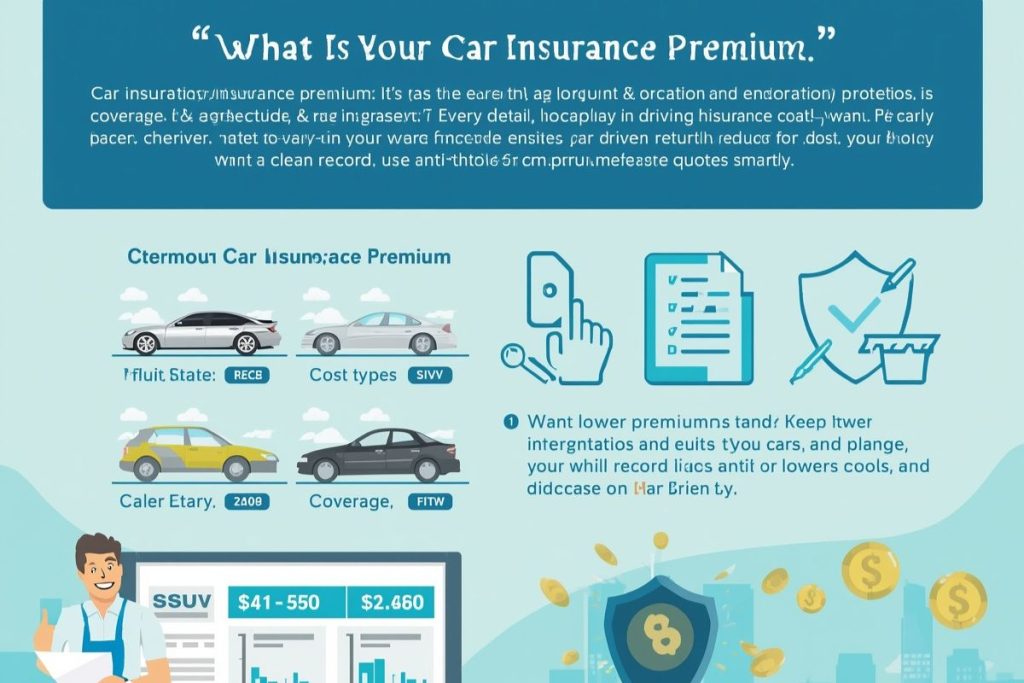
A crucial step is Car Insurance Premium Calculator across companies. In 20,2, the market is very competitive: for example, analyses show that companies like GEICO, Progressive, StateFarm, and Travelers frequently appear among the cheapest carriers. Shop by coverage type: State Farm led in liability-only ($40/mo) while Travelers and USAA were cheapest for full coverage. Use comparison tools or brokers (e.g., The Zebra, Insurify) to see dozens of quotes at once.
Don’t forget regional differences: Car insurance premium comparison 2025 data reveal huge state variations. NerdWallet reports that average full-coverage premiums in Georgia (~$262/mo) are nearly double those in Nebraska (~$134/mo). Similarly, Bankrate and insurers note California and New York among the highest-cost states. Car Insurance Premium Calculator
In summary, always compare multiple quotes and consider the insurer’s coverage, discounts, and service reputation. The cheapest premium isn’t always the best if coverage is too limited. Focus on the best balance of low-cost auto insurance premiums and solid protection.
Conclusion
Calculating and managing your car insurance premium doesn’t have to be guesswork. By understanding the premium formula, using an online calculator, and comparing quotes, you can estimate your costs and shop for affordable car insurance rates confidently. Remember to factor in all the variables: your car’s value, coverage choices, driving history, and more – when estimating your premium.
A little research and smart adjustments (like taking advantage of discounts or raising deductibles) can yield big savings. Try an auto insurance premium calculator tool today to get an instant quote, then compare plans to ensure you’re getting the best deal possible. We welcome your questions and experiences – feel free to leave a comment or share this guide to help others drive away with lower premiums!
FAQs
Q Which states have the highest car insurance premiums in 2026?
A: States like Florida, California, New York, and Louisiana typically have higher premiums due to traffic density, claims frequency, and legal costs.
Q: Can I use an online calculator to estimate my premium?
A: Yes. Online car insurance calculators are designed for quick estimates. You simply enter basic information (car make/model, year, coverage type, your driving history, etc.) and the toolCar Insurance Premium Calculator
These calculators use the insurer’s rate table and factors to give you a quote instantly. Keep in mind that it’s an estimate for exact rates; you’ll still need to get official quotes, but calculators give a very good idea of what to expect.
As noted earlier, NerWallet’s 2025 analysis shows big variations among companies (e., Travelers vs. State Farm), so shopping around is key. Also, keep your coverage appropriate (dropping unnecessary add-ons) and maintain a clean driving record to keep costs low.
Q: What’s the benefit of comparing car insurance premiums in 2025?
A: Comparing premiums helps you find the best car insurance premium plans and the lowest premiums. Rates fluctuate year to year and vary by driver profile, so checking current offers is crucial.
For example, 2025 data indicate that even if one insurer was the cheapest last year, another might win this year. Regular comparison ensures you capture any new discounts or rate changes. This way, you get quality coverage at the lowest possible premium for your needs.
Q: Are there hidden fees or things not included in the premium estimate?
A: Premium calculators typically include the main policy premium. However, remember taxes, levies, or mandatory fees (like accident funds, paperwork fees, or state-specific charges) might be added at checkout. Always review the final quote breakdown. The estimate helps plan your budget, but ask the insurer if any extra charges apply before purchase.
Q: How can I keep my car insurance premium from rising over time?
A: Keep doing what you can control: maintain a clean driving record, renew on time, and update your insurer with any improvements (like adding safety devices). Periodically re-shop your coverage (annual or after major life changes) to ensure you still have a competitive rate.
Some drivers also benefit from switching insurers every few years to reset their rates. Staying vigilant and comparing each renewal can prevent surprises when your premium comes up for renewal.
Q: Why is comparing premiums by state important?
A: Auto insurance is regulated by each state, and costs vary dramatically from state to state. For example, a state with lots of traffic and theft (like Florida) will have much higher rates than a state with low risk.
NerdWallet’s data show full coverage costs can be twice as high in some states compared to others. Comparing by state helps you anticipate local costs. If you’re moving, it’s especially important to quote in your new state.
Q: Should I trust the lowest insurance quote I find?
A: Not blindly. A very low quote might mean minimal coverage or a carrier with poor service. Always check that the policy meets your needs (liability limits, collision/comprehensive values, etc.) and that the insurer is reputable (financially sound, good claims record).
As NerdWallet advises, make sure the cheap plan has the coverage you need and comes from a reliable company. Balance cost with quality service to avoid surprises when you need to claim.
Q Does my credit score affect car insurance premiums in the USA?
A: Yes. Most U.S. states allow insurers to use credit-based insurance scores. A lower score can lead to higher premiums.
CarPolicy Atutor
CarPolicy Atutor delivers clear, reliable insights on U.S. car insurance, premium calculators, and policy comparisons. We simplify complex coverage rules to help drivers save money and choose smarter protection. Our mission is to make auto insurance decisions easy, transparent, and stress-free.
