Last Updated: 2026
Who This Guide Is For
This guide is for any American driver who wants the right coverage for their unique situation, not a cookie-cutter policy.“I’ve seen this happen more than once. best car insurance in the USA
Whether you’re a teenager on your parents’ plan, a busy parent with two cars, a senior on a fixed income, a new immigrant, or someone earning extra with rideshare deliveries, you’ll face different factors. We cover examples for high-risk drivers, low-income families, multi-car households, and more. If you want to avoid overpaying often by thousands of dollars on unnecessary coverage, and instead secure the right protection for your life and budget, this guide is for you.
Table of Contents
ToggleHow This Information Was Researched?
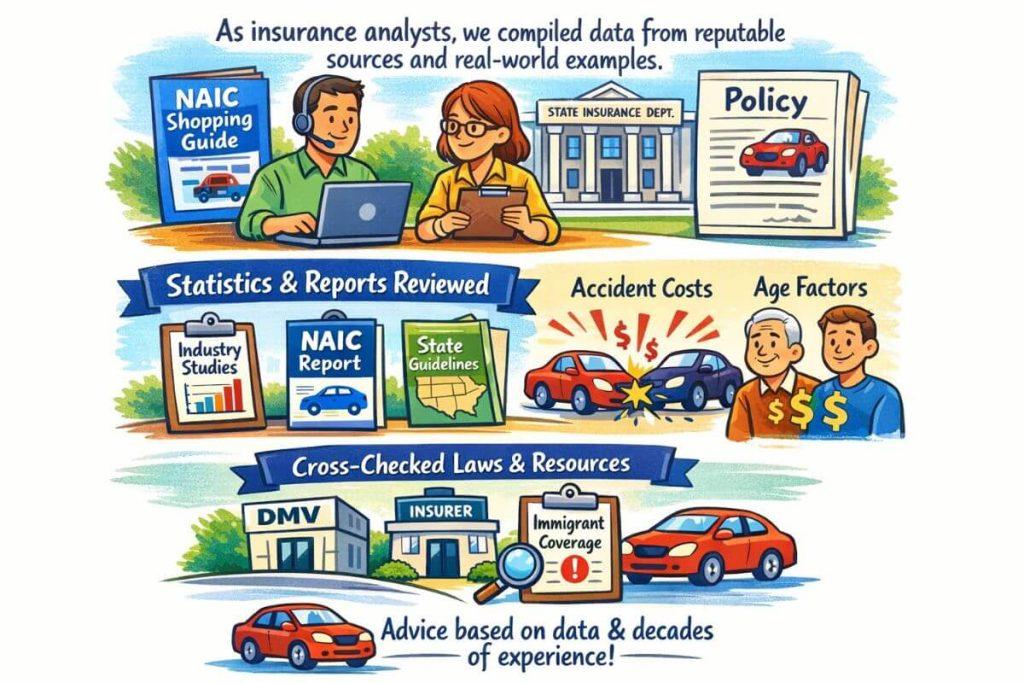
“In preparing this guide, we reviewed official tools like the NAIC shopping guide, state insurance departments, and real policy examples we’ve seen in practice.”
As insurance analysts, we compiled data from reputable sources and real-world examples. We reviewed official guidelines (like the NAIC auto insurance shopping tool), recent industry studies, and insurer resources to ensure accuracy.
This surprises many drivers. Statistics (for example, on accident impacts and age-based costs) come from industry reports. When possible, we cite authoritative sources: NAIC publications, state insurance departments, and published analyses. State-specific rules (e.g., for immigrant drivers or minimum coverage) were cross-checked against DMV and insurer websites. Any data gaps are noted, but the advice reflects both market data and decades of on-the-ground insurance experience.
Why “Best Car Insurance” Is Different for Every American?
There’s no one-size-fits-all Best Car Insurance in the USA for Families With Multiple Cars policy. Your ideal coverage depends on personal factors: where you live, how you drive, and who you are. For example, state laws vary. California requires a minimum liability of 15/30k, while New Jersey has 25/50k.
Insurers also weigh age and driving history differently. Drivers aged 50–69 are often rewarded with lower rates due to experience, whereas those 70+ may face higher premiums. Young drivers (16–19) typically pay far more, sometimes 3–4 times the rate of a 30-year-old, because teen crash rates per mile are roughly three times higher than for adults.
Income and family size matter too: low-income families might stretch to meet only minimum laws, while a large family may need higher liability limits. In short, right coverage is very personal. Instead of chasing a single “best” brand, focus on finding the best option for you: the right combination of coverages (liability, collision, etc.) at a fair price. (For example, see our comprehensive coverage guide for details on coverages.)
Best Car Insurance After an Accident?
Having an at-fault crash changes everything. Insurers will view you as higher-risk, so expect steep premium hikes and surcharges. On average, even a minor at-fault accident can raise your rate by 20–30%. Major crashes (serious injuries or lots of damage) often bump rates much higher, sometimes over 50%. The key now is your coverage structure, not just the cheapest insurer.
-
Premium increase: After a claim, ask about accident forgiveness or rate guarantees; without them, plan for a big jump. For instance, one analysis found a minor accident could add ~25% to a $1,200 premium.
-
Claims impact: Your crash will stay on record for years (typically 3 years for injury liability, up to 5 for some violations). This can keep your profile in a higher-risk tier.
-
Coverage matters: With a recent accident, maintain or increase coverages like collision, personal injury protection and uninsured motorist. It’s often wiser to keep sufficient insurance than drop coverage to “save” money right after a crash.
-
State rules: A few states limit rate hikes after small claims. Check if your state (e.g. WA or SC) restricts increases for property-damage-only claims.
| Accident Severity: Typical | l Rate Impact |
|---|---|
| Minor at-fault crash | +20–30% premium |
| Major crash (injury) | +50% or more (varies by insurer) |
Common mistake: Thinking the cheapest available policy will save you money after an accident. In reality, cheapest often means low liability or coverage gaps. Instead, review your needs. After a crash, you may want to pay more now for a policy that fully protects you next time.
Consider raising liability limits (e.g. to 100/300k) or adding an umbrella policy to safeguard your assets. Remember to compare quotes (NAIC recommends at least 3 quotes) even during renewal. On paper, it looks cheap, but in real life, it hurts.
Best Car Insurance If You Have a Speeding Ticket?
A speeding ticket won’t leave you completely uninsurable, but it will cost you. Most insurers use your Motor Vehicle Record (MVR) to rate you. Each violation adds points and moves you into a higher risk bracket. On average, one speeding ticket can bump your premium 10–25%. For example, Liberty Mutual estimates about a 25% increase per ticket, while industry data says a minor speeding ticket often means +10–20%.
-
Risk score: Insurers track violations from at least the past 3–5 years. A single ticket usually stays on record for 3 years or more, affecting renewals for that period.
-
Premium adjustment: The rate hike depends on severity. Going 10–15 mph over the speed limit might cost ~10–20%, but 20+ mph or multiple tickets can raise it much more. Even a single ticket is typically more expensive than having a clean record.
-
Common mistake: Many drivers simply pay the ticket without exploring options. In fact, legal experts note that paying the ticket is an admission of guilt, closing off your ability to contest it. Some forget about defensive driving courses or traffic school that could keep points off their license. Also, do not assume your insurer will magically forgive it – ask about “first-offence” forgiveness programs if available.
To mitigate, check if you qualify for a discount or can take a driving safety course for insurance credit. After receiving a ticket, it’s smart to shop around: insurers weigh violations differently, so another company might be more lenient. (NAIC guidelines suggest comparing “the same coverage” when you shop, so make sure to compare like-for-like.) Above all, do not lie about the ticket – it will eventually show up, and nondisclosure can void claims.
Best Car Insurance for Families With Multiple Cars?
Insuring two or more vehicles usually brings savings. Most companies offer a multi-car discount, often reducing each vehicle’s premium when bundled. In fact, MoneyGeek found that families with multi-car policies save on average $500–$830 per year, and in some states, discounts exceed 50%. However, simply bundling isn’t enough; you must also ensure adequate coverage.
-
Multi-car discount: Having multiple cars on one policy typically earns 10–25% off each additional vehicle. Major insurers confirm these discounts, and analysis shows substantial average savings.
-
Liability limits: With more drivers, accidents can affect more people. It’s wise to raise liability limits above state-minimum (for example, to 100/300k). A common family mistake is keeping only the minimum coverage to save money, which can leave you exposed if a crash involves serious injuries.
-
Policy structure: Usually, one policy for all vehicles is the cheapest. However, if one driver is very high-risk (like a teenager), some families put that car on a separate policy to avoid inflating rates on all cars. Assess your mix carefully.
-
Long-term savings: Bundling (auto + home) often gives extra discounts. Also, review coverages: maybe an older car in the fleet only needs liability, which can save premium on that vehicle.
In short, the best approach is a balanced policy: take advantage of multi-car and bundling discounts, but prioritise enough coverage for everyone in the household. (For example, see our guide to auto insurance discounts for more.) Always compare quotes; for some families, separate policies might work better.
Best Car Insurance for New Immigrants in the USA?
Newcomers often face sticker shock on auto insurance. If you have no U.S. driving history, most insurers will treat you like a brand-new driver. That means your premium is based on age, address, and other factors, but not any foreign record.
To qualify for insurance, gather all your documentation: your home country license, an International Driving Permit (if available), proof of local address, and any driving record from abroad. These documents help agents and underwriters verify who you are. Also, check your state’s DMV for requirements – some states need a Social Security number or proof of lawful presence for licensing.
-
Coverage needs: As a non-citizen driver, you still must meet your state’s minimum insurance requirements. Beyond that, don’t feel pressured to skimp. Some agents may only offer liability until you build U.S. credit; instead, consider adding collision or uninsured motorist if you can afford it.
-
Trust and transparency: A good agent will explain that you won’t get “foreign driver discounts” – everything is reset. They should also tell you about any language or community resources. If someone just quotes you the cheapest policy without details, ask questions: about adding an experienced co-driver (like a spouse) to lower rates, or about policy limits.
-
What agents don’t always explain: For example, having just one month of U.S. driving with a clean record can qualify you for lower rates, but not all agents mention that. Likewise, if you only have a tourist visa, you may need a temporary or rental policy until you get a local license. Be proactive: compare offers from at least a couple of insurers and confirm they’re comfortable insuring someone new to the U.S. (StateFarm and others reassure drivers this is normal). In general, the right insurance for an immigrant driver is the one that meets legal requirements and gradually lowers rates as you establish a record in the U.S.
Best Car Insurance for Low-Income Drivers?
When money is tight, drivers often buy only the cheapest coverage available – usually state-minimum liability. While this minimizes premium, it carries big risks. Liability-only is always the cheapest policy, but it won’t pay for any damage to your car or injuries to you. The Zebra analysis warns that if your car is totalled under a liability-only plan, you get nothing for it.
-
State minimum vs. adequate protection: State minimums (e.g. 25/50/25) meet legal requirements, but may leave you financially vulnerable. If you cause an accident, high medical or damage costs could exceed those limits. Experts often recommend at least 50/100/50 liability as a safer floor. That higher limit typically costs only modestly more.
-
What not to cut: Collision and comprehensive are optional, but think carefully before dropping them. A common mistake is dropping collision to save premium, then getting stuck with the entire bill after a crash. If your car has even some value, carrying collision (and comprehensive against theft, vandalism, and weather) can be important protection. Also, don’t drop uninsured/underinsured motorist coverage – low-income drivers might live in areas with more uninsured motorists, and this covers your injuries if a bad driver hits you.
-
Financial risk: Skimping on coverage can backfire: medical bills or legal judgments from an accident can wipe out savings. Some states offer assistance programs (e.g. Maryland’s Auto Insurance Fund or NJ’s Shared Base Insurance) for drivers who can’t get standard insurance, but these are limited.
-
Help with premiums: Ask insurers about payment options. Some let you split the annual premium into several instalments or even a “Pay-in-Four” plan, which avoids a large down payment. Also inquire about low-income discounts or community programs (like non-profits or credit unions that partner with insurers).
In summary, prioritise key protections even on a budget: a bit more liability coverage can save you thousands if trouble strikes. The cheapest plan isn’t always the safest choice. (For ideas on saving, see our low-income insurance tips.)
Best Car Insurance for Young or First-Time Drivers?
Young or new drivers almost always pay the most. Teenagers have far higher crash rates, so insurers charge extra. Data shows a typical 16-year-old’s annual premium (~$7,658) is roughly 3× that of a 30-year-old. The reasons: inexperience, distracted driving, and statistical risk. Boys often cost slightly more than girls due to higher risk behaviours. Best Car Insurance in the USA
-
Parent policy vs. own policy: Minors (under 18) cannot have their own insurance policy, so they must be listed on a parent’s or guardian’s policy. Even once they turn 18 or 19, many still stay on a family plan for a few years. Adding a teen can significantly raise the whole policy’s premium.
-
Long-term impact: A teen’s record affects the family. Any accident or DUI by the young driver will hit the family’s rates for 3–5 years. A common strategy is to carry higher deductibles or drop optional coverages on the teen’s vehicle to save premium, but keep liability high.
-
Discounts and education: Encourage your young driver to earn good-student discounts (often 5-20% off). Completion of a driver’s ed or defensive driving course can yield discounts (5-15% off) and show insurers the teen is investing in safety.
-
Common mistake: Some parents think they should just drop coverage on the teen’s car to save money, but that leaves the teen’s vehicle uninsured for damage. Also, never assume teen drivers can be taken off the policy entirely – lacking coverage is illegal.
In practice, balancing cost and safety is key. Many families carry only liability on older teen cars, and have students work part-time to afford full coverage. As your teen gains experience, good driving records will lead insurers to lower rates.
Best Car Insurance If You Drive for Uber / Delivery?
Using a personal car for Uber, Lyft or delivery work creates special coverage needs. Your standard personal policy typically excludes any commercial use. This means if you get in an accident while carrying a passenger or goods and haven’t bought extra protection, the claim could be denied. Rideshare companies do provide coverage, but it has limits and gaps:
-
Coverage phases: Uber/Lyft generally have three phases. Offline – personal coverage applies. Available-for-hire – some apps provide limited liability (for example, Uber offers just $25k property / $100k bodily injury if you’re at fault). On-trip – they offer up to $1M liability coverage plus collision if you have your own comprehensive/collision.
-
Coverage gap: If you decline collision on your personal policy (to save money) and then a passenger hits your car, Uber/Lyft’s insurance only covers a portion (minus a high deductible). Worse, during “available” mode, if you crash, only minimal TNC liability applies. Without a rideshare endorsement, your personal insurer might refuse any claim that happened while the app was on. Allstate advises that personal policies normally exclude business use, so adding a rideshare endorsement can help fill these gaps.
-
Claim denial risk: Many gig drivers discover this the hard way. For example, if you’re delivering pizzas and you get rear-ended, the company’s insurance might not pay for your car repairs if they determine it was “business use.” Without proper coverage, you could pay thousands out of pocket.
Solution: Obtain a rideshare endorsement or a commercial policy. These are extra coverage plans from your insurer (or speciality insurers) that cover all rideshare phases. They cost more, but protect you fully. In any case, always maintain collision and comprehensive if you are doing rideshare, because Uber/Lyft only cover your collision with a $2,500 deductible.
Best Car Insurance for Seniors?
Older drivers often have mixed stereotypes. In reality, drivers aged 50–69 are usually seen as low-risk and often pay lower premiums than younger drivers. However, insurers may consider drivers 70+ as higher risk (due to factors like slower reaction times), so premiums can climb after age 70. The good news: many seniors drive less, which insurers reward.
-
Mileage factor: Many insurers offer low-mileage or pay-per-mile programs. If you’re retired and drive under ~8,000–10,000 miles a year, ask about mileage discounts. For example, usage-based insurance programs or simple mileage discounts can shave a significant percentage off your premium. Always report your actual mileage; it could save a lot.
-
Discounts: Don’t assume age alone guarantees a discount. Yes, there are “mature driver” discounts (usually starting at age 55 or 60), but they often require completing a defensive driving course. Other common senior discounts include lowered rates for low mileage, membership in organisations (like AARP), or having more than one policy (home or life) with the insurer. Always ask specifically about senior discounts.
-
Review timing: As you age, your situation changes. It’s a smart habit to shop around every renewal, especially after 70. Liberty Mutual advises getting at least three quotes, because insurers weigh age differently. You might find one company increases rates, while another actually lowers them for your age group. Even within a company, adding features like a safety device (a new car with collision alert) could trigger a discount.
In summary, age can sometimes increase rates, but driving fewer miles and maintaining a clean record can offset that. Take advantage of any senior-specific discounts (often 5–15% off) and bundle or compare quotes annually to keep costs down. This comparison helps drivers narrow down the best car insurance in the USA based on real-life situations.
Which Car Insurance Fits Which Situation?
| Situation | What Matters Most | Common Mistake |
|---|---|---|
| After an accident | Coverage & claims history | Choosing the cheapest renewal policy |
| Multiple-family cars | Multi-car discounts & liability | Relying on state-minimum coverage |
| Speeding or violations | Driving record points & rates | Underestimating one ticket’s effect |
| New immigrant | Required documents (license, etc.) | Accepting the first agent quote blindly |
| Low-income | Adequate liability/protection | Cutting essential coverages |
| Teen/young driver | Experience & driver training | Insuring them on a separate, cheap policy |
| Rideshare driving | Personal vs. commercial coverage gap | Using only a standard personal policy |
| Senior driver | Annual mileage & age-based discounts | Not re-shopping after age 70 |
This table highlights what to focus on and what pitfalls to avoid in each scenario. For a deeper comparison of policies, see our policy comparison checklist. This comparison helps drivers narrow down the best car insurance in the USA based on real-life situations.
How to Choose the Best Car Insurance in the USA (Step-by-Step)?
-
Identify Your Risks: List your specific factors, such as accidents, tickets, miles driven, job (e.g. delivery driving), household members, etc. These define what must be covered. For instance, if you have teenage drivers, good-student or driver-training discounts matter; if you drive a lot, collision and comprehensive are important; if you drive for work, you need rideshare coverage. Best Car Insurance in the USA for Families With Multiple Cars
-
Match Coverage to Your Life: Choose policy limits and types based on those risks. Don’t just accept the default or cheapest. Ensure liability covers your assets if you’re at fault, and buy collision/comprehensive if you can’t afford car repairs out of pocket. For families, increase liability per person/vehicle; for low-income, avoid underinsured gaps. In short, get the protection that fits your situation, not just the cheapest premium.
-
Compare Quotes and Terms: Collect at least 3 quotes from different insurers. Use the NAIC tip: always compare the same coverages and limits. Pay attention to deductibles, policy fees, and specific terms (roadside, rental car, etc.). Some insurers offer better rates for certain drivers, so comparison is crucial.
-
Review Policy Details: Carefully read exclusions and endorsements. For example, confirm if your policy covers a rental car automatically, or if certain vehicle mods are covered. If you have special needs (rideshare driving, high-value items in the car, etc.), make sure to add the right endorsements (like rideshare or full glass coverage). Look at the Declarations page before buying.
-
Re-check Every Year: Life changes over time: moving to a safer area, children leaving home, adding security devices, or improved credit can all lower costs. Each year at renewal, revisit your needs and rates. NAIC recommends re-shopping annually. Even if you plan to stay, small adjustments (raising deductibles, asking for new discounts) can save money.
Buying insurance is a balance of cost and protection. Stay calm and methodical: if any step is confusing, consult a licensed insurance advisor. (If you prefer online tools, check out resources like our auto insurance comparison guide to help you gather quotes.)
Frequently Asked Questions?
Q: Is the cheapest car insurance always risky?
Ans: Not always, but often. Very cheap policies usually mean minimal coverage (like state-minimum liability) or high deductibles. This saves money upfront, but may leave gaps if you crash. For example, liability-only won’t pay to repair your car. The key is balance: make sure you have enough coverage. Compare quotes to find an affordable policy that still protects you.
Q: Does insurance follow the car or the driver?
Ans: Generally, auto insurance follows the vehicle. If you borrow someone’s car, that owner’s insurance is primary. However, some insurers also cover you when you drive others’ cars (called “non-owner” coverage). Rules vary by state, so check your policy: you might need to purchase non-owner insurance if you regularly drive cars you don’t own.
Q: Can immigrants get full coverage in the USA?
Yes. Non-U.S. citizens are required to meet the same insurance rules as citizens. As long as you have a valid driver’s license (or International Permit) and car registration, you can buy full coverage (comprehensive/collision) just like anyone. Insurers do not sell “worse” policies to immigrants; the challenge is usually higher initial rates if you lack a U.S. driving history.
Q: How often should I shop for a new policy?
Ans: At least once a year, typically at renewal time. Life changes (new car, moving, adding a driver, improvements in driving record) can affect your rate. Many experts advise getting at least 3 new quotes each year, since insurers update their risk models frequently. Even a small rate drop can add up over time. Not necessarily. The best car insurance in the USA balances affordability with adequate protection.
Q: What minimum coverage is required by law?
Ans: Each state sets its own liability minimums (commonly 25/50/25). You can find these on your state insurance department’s website. Note these are minimums – many experts recommend higher limits (e.g. 50/100/50) for real protection. Also, some states require extra coverages: e.g., Florida and New York require Personal Injury Protection (PIP). Always check your state’s rules.
Q: What if I move to another state?
Ans: Usually, your current policy will adjust if your new state has higher minimums. Notify your insurer immediately after moving; they will apply the state with the highest requirement. (And yes, you’ll need a local driver’s license per state law.) If coverage needs increase, you may see a premium change. Re-shopping in your new state is wise, too, as rates can differ significantly by location. Not necessarily. The best car insurance in the USA balances affordability with adequate protection.
Have more questions? Leave a comment below or contact a licensed agent for personalised advice. And if you found this guide helpful, please share it with friends or family. Everyone deserves to have the right coverage.
Conclusion
Ultimately, the best car insurance in the USA is the policy that fits your life, not just your budget. The best car insurance in the USA isn’t just a famous brand name; it’s the one that fits you. We’ve seen how factors like accidents, tickets, family size, and driving habits each change the equation. By aligning your policy with your real life and risk factors – rather than chasing the lowest rate or a familiar logo – you’ll protect both your wallet and your future. Regularly compare quotes, keep your coverages updated, and avoid needless gaps. In the end, honest, situation-specific coverage is the most valuable protection you can choose.
About the Author: About the Author:
John Smith is a U.S. auto insurance analyst at CarPolicyUSA with over 7 years of experience helping drivers find the right policies. He holds a license in property and casualty insurance and has guided thousands of consumers through complex coverage decisions. At CarPolicyUSA, John draws on industry data and field experience to offer practical, neutral advice (no company bias) so you can make informed choices and avoid costly mistakes.
