Last updated:2026
Finding affordable auto insurance can be difficult for teenagers and college students in the United States. Because young drivers have limited experience, insurance companies usually charge higher premiums compared to older drivers. However, students can still find affordable coverage by using smart strategies such as good student discounts, family policy benefits, and safe-driver programs. Many major insurers offer special programs designed specifically for student drivers to reduce costs. In this updated 2026 guide, we explain why student insurance is expensive and show proven ways to lower premiums. By following these expert tips, students can secure reliable and budget-friendly car insurance in the USA.
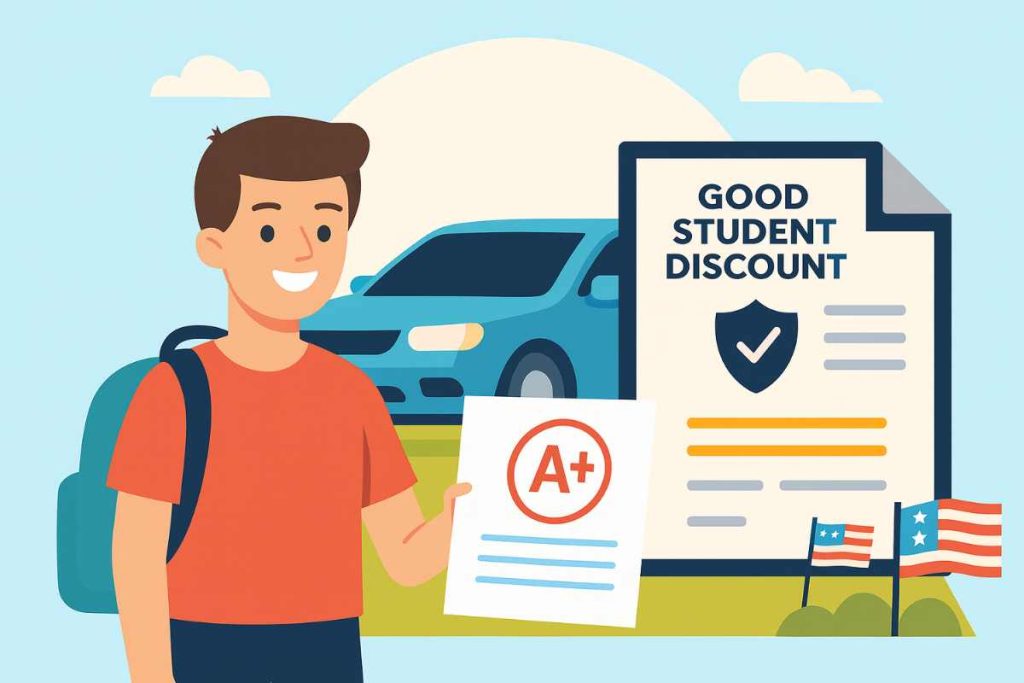
Why Are Insurance Rates High for Young Drivers in the USA?
Teen drivers face sky-high insurance premiums. USA Student Car Insurance In the USA, 16-year-olds pay an average of $7,658 per year for car insurance, which is over 250% higher than what a 30-year-old driver pays. Why so much? Young drivers lack experience and tend to have more accidents. Studies show 16-19-year-olds have a crash rate three times higher than older adults. In fact, insurers know that teenage motorists are more likely to speed, be distracted, or take risks. This drives up the base cost of any insurance policy for a teen.
Because of this, “good student insurance USA Student Car Insurance programs and other discounts exist to reward safer, more responsible young drivers. Insurers believe students with strong grades tend to drive more carefully. For instance, Investopedia notes that discounts like the good student discount are offered because students with good grades are considered more responsible behind the wheel. Generally, prices start very high for new teen drivers, then gradually drop as they gain experience. According to Progressive data, insurance premiums typically decrease by ~8% at age 19 and another 6% at age 21 as teens’ driving records improve.
However, while experience grows, first-year drivers often have to cover the expensive initial rates. Since most U.S. states require insurance (except a few like Virginia, which permit a monetary deposit), young drivers must either get their own policy or be added to a parent’s. Having student car insurance means understanding these factors: your age, driving history, location, and even gender (teen boys often pay up to 9% more than teen girls. Geography matters too – for example, teens in New Hampshire, Louisiana and Florida face some of the nation’s steepest rates.USA Student Car Insurance
In sum, teen car insurance is costly because of the higher risk. The good news? There are proven ways to cut costs. Using discounts (like “student discount auto” programs), driving safely, and bundling policies can all help offset those teen premiums. Let’s explore those options next.USA Student Car Insurance
Best USA Student Car Insurance Companies Comparison (2026)
| Insurance Company | Average Student Discount | Key Benefits for Students | Best For |
|---|---|---|---|
| State Farm | Up to 25% | Good student discount, driver training discount, accident-free rewards | High student discounts |
| GEICO | Up to 15% | Affordable policies, easy online quotes, and good student discounts | Budget-friendly insurance |
| Allstate | About 22% | Smart Student program, teenSAFE driving program | Safe driving rewards |
| Progressive | 5% – 10% | Snapshot telematics program, multi-car discounts | Usage-based savings |
| Nationwide | Up to 15% | SmartRide telematics, student discounts | Low-mileage drivers |
| USAA | Around 10% | Very low premiums, strong customer satisfaction | Military families |
Tips to Get Affordable USA Student Car Insurance?
Getting cheap student car insurance often means combining strategies. The following tips can dramatically reduce what young drivers pay:
-
Add the Student to a Parent’s Policy. Most insurance experts (and companies like Progressive) agree it’s usually cheaper to add your teen to an existing family policy than to buy them a separate one because the policy’s low-risk adult history (on time without accidents) can bring the teen’s cost down. As Progressive explains, a standalone teen policy “can be expensive due to their lack of driving experience,” so adding the teen to your own policy typically makes more sense. This way, the established premium history and any multi-car discounts you have carry over.
-
Use Good Student Discounts. Almost every insurer offers a good student discount USA Student Car Insurance, also called “student discount auto” or “good student insurance USA”). You qualify by maintaining a strong GPA (usually a B average or better) while being a full-time student. These discounts typically cut 10–25% off the teen’s portion of the premium. For example, MoneyGeek finds that Allstate offers about a 22.5% discount and State Farm up to 25% for qualifying students. USA Student Car Insurance GEICO gives around 15%, Nationwide ~15%, Progressive ~5–7%, and even USAA offers roughly 10% for military families. To use this, just keep up your grades and submit report cards when the insurer asks.
-
Maintain a Clean Driving Record. Teens should avoid accidents and tickets. Safe driver discounts are common: teens with no violations or claims can earn substantial reductions (sometimes up to 30%). Good grades and a good record together multiply the savings. USA Student Car Insurance. For example, Progressive notes that being accident-free for five years earns a young driver a “good driver” discount in addition to any student discounts.
-
Enrol in Driver’s Education. Many insurers offer discounts if the teen completes an accredited driver’s ed course. Some companies, like Allstate, even have specialised programs (e.g. teenSMART) that can yield extrasavingsg A certificate from driver’s ed may trim the premium because insurers trust trained new drivers are safer.
-
Leverage Usage-Based Programs. Modern options like Progressive’s Snapshot or similar usage-based plans can cut rates if the teen drives carefully. For instance, Progressive’s Snapshot lets the insurer track driving habits; safe driving can earn up to 40% off. In general, telematics programs reward low mileage, smooth braking, and no night driving – things that often describe college commuters. If your student’s driving profile is clean, these programs can translate to big savings.
-
Drive a Safe/Modest Car. USA Student Car Insurance: The type of vehicle matters. Insuring a sports car is much pricier than insuring a used sedan or compact. Placing your teen in a smaller, safe vehicle with good crash ratings and anti-theft devices can lower premiums. Cars with automatic transmissions and good safety features (airbags, anti-lock brakes, cameras) often earn a safety discount. A less flashy car also tends to cost less to repair or replace, which insurers like.
-
Combine Policies (Multi-Car Discount). USA Student Car Insurance Most insurers, including State Farm and Progressive, allow multi-car discounts. As MoneyGeek notes, you can often save another 25% by insuring multiple vehicles under one policy. If your family has more than one car (your car and the student’s car), make sure they share the policy. That’s doubly helpful: even a student with their own car will get a break, and the whole family benefits.
-
“Student-Away-At-School” Discounts. If a college student drives the car only during holidays (keeping it at home otherwise), some insurers offer a “student-away” discount. Progressive mentions that if the car is left parked at school (or the student is away) most of the year, you can get a special rate when the student only uses it on breaks. Check with your insurer for this; policies vary by state and company.
-
Shop Around Annually. Teen insurance rates can vary widely by company. As Compare.com reports, carriers like Country Financial can offer very low average rates for young drivers (around $54/month). But the cheapest insurer for one teen might not be the cheapest for another. Major players like Progressive, GEICO, State Farm, Liberty Mutual, and USAA (for military families) all have different pricing. Get quotes each year to see who offers the best rate for your student. Comparing free quote tools or working with an independent agent can reveal the lowest options in your state.USA Student Car Insurance
By combining these methods, a smart student driver or parent can drastically cut the cost of college student auto insurance. For instance, a student who earns a good student discount, stays accident-free, and takes driver’s ed could see total savings of 30% or more off their teen rates.
Insurance Options and Discounts for College Students?
College students have unique situations. If your student drives a car to campus, consider whether they need full coverage or just liability. In many cases, college kids opt for liability-only (to meet legal requirements) and leave collision/comprehensive off the policy to save money – especially if their car’s value is low. However, if they have a loan on the car, full coverage may be required by the lender.
Dorm vs. Campus: USA Student Car Insurance. If the student will be away at college most of the year, tell your insurer. As mentioned, a “student away” discount might apply. You can also potentially reduce coverage when the car is seldom used (though switching coverage on and off can be tricky and sometimes not allowed by policy terms, so confirm first).
Military Connection (USAA): If the student is a dependent of military personnel, USAA often offers the cheapest rates. According to MoneyGeek, even though USAA’s good student discount is modest (~10%), its overall premiums are typically very low for eligible members. USAA requires military affiliation, but if you qualify, it’s worth checking them first.USA Student Car Insurance
Youthful Driver Plans: Some insurers offer “youthful driver” or “young driver” programs with tailored policies for ages 16–21. These might include specific curriculum discounts or a gradual increase in coverage as the driver gains experience. Liberty Mutual, for example, advertises discounts for teens and drivers under 25, including academic and organisational discounts. GEICO and others similarly have dedicated sections on “Car Insurance for Teens” with tips and discounts.USA Student Car Insurance.
Coverage Types: Don’t forget the basic coverage choices. Young drivers often carry higher liability limits or add coverage like rental car or roadside assistance without realising it. Review the policy: raising the liability limits only needs to align with assets (which a teen likely doesn’t have many), and dropping unnecessary add-ons can save. On the flip side, forced low coverage might leave the teen and their parents unprotected. Balance cost with protection.
Graduated Driver Licensing (GDL): Nearly all states have GDL laws that impose restrictions (like no night driving or passenger limits). Completing driver education and following GDL rules can indirectly help. Some insurers view GDL compliance as evidence of safe driving. In some states, proof of GDL completion can even earn a small discount or rate reduction on a teen’s policy.
Top Car Insurance Companies for Young Drivers?
All major insurers offer student and teen discounts, but rates vary. Here are some highlights based on industry surveys and discount information:
-
State Farm: A giant insurer known for its “good student discount” of up to 25% for students under 25 with a B average or better. State Farm also has driver training discounts and accident-free bonuses. If your teen qualifies, State Farm’s discount is one of the highest available (22.5% from MoneyGeek.
-
Allstate: Offers a “Smart Student” discount (usually around 22.5% for a 2.7+ GPA and a teenSAFE driving program. Allstate often runs promotions like accident forgiveness (which can be valuable if the teen does have a claim). MoneyGeek shows Allstate’s good student savings at about $594 annually for a typical teen driver.
-
GEICO: GEICO’s good student discount is up to 15%. It’s straightforward (B average or Dean’s List, etc.) and applies to their lowest-cost coverage lines. GEICO is often competitive on price and runs online-friendly discounts. MoneyGeek puts GEICO’s good student savings at $378 on average. USA Student Car Insurance
-
Progressive: Offers a modest student discount (~5-7%and multi-car discounts. Progressive is known for its usage-based Snapshot. One plus is that Progressive often advertises lower increases as teens age (as seen in their table of rate changes. Progressive also emphasises adding young drivers to a family policy.
-
Nationwide: Nationwide’s good student discount is around 15% (according to MoneyGeek). Nationwide also has a SmartRide telematics program. It’s not always the very cheapest provider, but worth quoting for students, especially if your state has many college campuses (they have campus rep programs).
-
Country Financial: Compare.com found Country Financial to have the lowest average premium for young drivers (around $54/month in 2026). While Country Financial isn’t available nationwide (primarily the Midwest and/West), if it’s in your state, it’s worth checking for a quote.
-
Liberty Mutual: USA Student Car Insurance has specific teen driver discounts, including a “RightTrack” telematics discount. They also allow students away from school leave school without their car. Liberty Mutual often provides discounts for drivers under 25, college-related (like completing college courses), and more.
-
Travellers & Others: Travellers offers a 12% good student discount, according to MoneyGeek. Other companies like Farmers, MetLife, etc., all have some student/teen discounts too. The key is to compare: one insurer might have a lower base rate but fewer discounts; another might offer aggressive discounts but slightly higher list rates.
Tip: Use online comparison tools or talk to an independent agent. If the student has any special circumstances (e.g. bundle with home/renters insurance, etc.), make sure to ask. Be aware that some insurance companies are state-licensed only; USAA is only for military families, Country Financial is limited regionally, etc. Allstate, State Farm, GEICO, Progressive, Nationwide, and Liberty Mutual operate in most states.
How to Further Lower Student Auto Insurance Costs?
Beyond the big items above, a few quick tactics can help: USA Student Car Insurance.
-
Raise the Deductible: Agree to pay more out of pocket in a collision claim (e.g. $500 or $1,000 instead of $250) to lower the premium. Teens often want low deductibles, but if the car isn’t worth much, consider raising it.
-
Drive Less (Lower Mileage): Many insurers charge based on expected mileage. If the student’s car sits unused at college, report lower annual mileage to the insurer. Less driving means fewer chances of accidents, which can sometimes be officially rated.
-
On-Time Payments: Paying the policy in full (annual or semi-annual) often avoids small fees. Also, opt for automatic payments or direct debit if it reduces fees. Insurance companies sometimes add a little for monthly billing.USA Student Car Insurance
-
Maintain Residence Discounts: Some companies give lower rates if the student is living in the parents’ household (even while at college) or if they are enrolled in a college more than 100 miles away (considered lower risk since they won’t drive home often.
-
Safety & Anti-Theft: Ensure the car has alarm systems, tracking, or anti-theft devices. Bonus points if it has modern driver-assist features like lane departure or automatic braking; insurers love advanced safety tech, even for teens.USA Student Car Insurance
-
Work or Academic Discounts: If the student works part-time or volunteers, ask your agent. Some companies (e.g. State Farm’s Steer Clear program or special programs via schools) offer discounts for responsible youth in extracurricular activities.
-
Avoid Lapses in Coverage: Keep the policy continuous. A lapse (even if due to switching to the parent’s name) can cost a young driver – insurers will charge a higher rate to “start fresh”.
-
Review Annually: A student’s status changes rapidly. A junior in high school has different needs than a 20-year-old senior in college. Each year, re-evaluate. As status, grades, or residency change, you may qualify for new discounts or need different coverage.
Pros and Cons of USA Student Car Insurance?
Pros
✔ Access to Valuable Student Discounts
Many insurance companies offer good student discounts, which can reduce premiums by 10% to 25% for students who maintain strong academic performance.
✔ Flexible Policy Options
Students can choose between liability-only coverage or full coverage depending on their budget and vehicle value, making insurance more flexible.
✔ Family Policy Savings
Adding a student driver to a parent’s insurance policy often results in lower premiums compared to purchasing a separate policy.
✔ Telematics and Safe Driving Rewards
Usage-based insurance programs reward students who drive safely, sometimes offering up to 40% savings through telematics monitoring.
✔ Coverage for Unexpected Accidents
Student car insurance provides financial protection against accident costs, vehicle damage, and liability claims.
Cons
✖ Higher Premiums for Young Drivers
Teen and college drivers typically pay significantly higher insurance rates because insurers consider them high-risk due to limited driving experience.
✖ Limited Driving History
Without a strong driving record, students may struggle to qualify for the best insurance discounts.
✖ Strict Eligibility Requirements for Discounts
Some discounts require maintaining specific GPA levels, completing driver education programs, or meeting mileage limits.
✖ Expensive Full Coverage Policies
If a student drives a newer or financed vehicle, full coverage insurance can be costly.
✖ State-Based Price Differences
Insurance rates vary widely depending on the state, meaning some students may face higher premiums simply due to location.
Frequently Asked Questions About USA Student Car Insurance (2026)?
1. What is the cheapest car insurance option for students in the USA?
The cheapest option for most students is to be added to a parent or guardian’s auto insurance policy. This allows the student to benefit from family discounts, multi-car savings, and the parents’ driving history, which usually lowers the overall premium compared to buying a separate policy.
2. Do college students qualify for special car insurance discounts?
Yes. Most major insurers in the USA offer student-specific discounts such as good student discounts, driver education discounts, safe driver rewards, and low-mileage discounts. These programs can significantly reduce insurance premiums for responsible student drivers.
3. How much can a good student discount reduce insurance costs?
A good student discount can typically reduce car insurance premiums by 10% to 25%. Students usually need to maintain a B average (or equivalent GPA) and be enrolled full-time in high school or college to qualify.
4. Is it better for a student to have their own insurance policy?
In most cases, it is more affordable for students to stay on their parents’ insurance policy. Separate policies for young drivers tend to be expensive because insurers consider teenagers and young adults higher-risk drivers.
5. Can insurance rates decrease as student drivers gain experience?
Yes. Insurance premiums often decrease as young drivers gain more driving experience and maintain a clean driving record. Many insurers gradually lower rates when drivers reach ages 19, 21, or 25.
6. What factors affect student car insurance rates in the USA?
Several factors influence student car insurance rates, including age, driving history, location, type of vehicle, coverage level, and eligibility for discounts such as good student or safe driver programs.
